- HIPAA Insider
- Posts
- Why 70% of health tech projects fail
Why 70% of health tech projects fail
In this week’s issue, we break down what founders get wrong about HIPAA compliance—and why fixing it late usually costs more.

HIPAA Insider
March 11, 2026
Health tech, HIPAA, and the high cost of building too late by HIPAA Vault
In healthcare software, “we’ll deal with compliance later” is usually how expensive mistakes get made. This week, we’re diving into why so many health tech projects fail—and why building with HIPAA compliance from day one can be the difference between scaling up and starting over.
Healthcare founders usually start with a strong mission: improve patient outcomes, simplify workflows, or make care more accessible. But building a healthcare product takes more than a strong idea—it requires secure architecture, compliance-ready infrastructure, and careful handling of patient data from day one.
In a recent episode of the HIPAA Insider Show, Hazen Monsour, founder of Technology Rivers, explained why so many projects stall before launch. The biggest problems tend to be:
Unclear requirements: Teams start building before workflows, users, and compliance needs are fully defined.
Compliance added too late: Security gets treated like a patch instead of part of the product.
Weak technical foundations: Without the right architecture, startups often face expensive rebuilds.
Why it matters: HIPAA compliance is not just about hosting. It has to be built into the application itself through encryption, access controls, secure authentication, and audit logging.
The big takeaway: Startups that design for compliance early are better positioned to launch faster, build trust, and grow without redoing the entire product later.
Quote of the week
“Compliance only slows you down when it’s bolted on late. When it’s designed into workflows early, it actually accelerates scale.”
→ Listen on Spotify
→ Watch the full episode on YouTube
Industry News Roundup
One Access Gap, 1.2 Million Patient Records
A former Nuance Communications employee pleaded guilty after accessing and copying protected health information tied to roughly 1.2 million Geisinger patients after his termination. According to the case, his access was not revoked immediately, giving him enough time to remove sensitive data before the breach was caught. The information reportedly included patient names, contact details, birth dates, medical record numbers, and demographic data.
This is the kind of incident that turns a routine offboarding failure into a major compliance and security crisis. In healthcare, access controls are not just an IT housekeeping task—they are a frontline defense for patient data. When deprovisioning is delayed, the fallout can include breach notifications, legal exposure, reputational damage, and a costly compliance response.
→ Read the full story behind the breach—and the offboarding failure that made it possible.
Ransomware, breach notices, and another 25 million-record fallout
It’s been a busy week in healthcare security. Insight Hospital and Medical Center disclosed a cyberattack tied to unauthorized access in its network, with potentially sensitive data exposed, including Social Security numbers, financial information, treatment details, and insurance data. Community Health Action of Staten Island also reported a breach involving sensitive personal, financial, and medical information, while BlueCross BlueShield of Tennessee confirmed that some of its members were affected by the massive Conduent Business Services breach.
Why it matters: These incidents are a reminder that healthcare breaches rarely stay contained. One attack can disrupt hospitals, expose highly sensitive patient data, and ripple outward through vendors and partner organizations. For healthcare leaders, the lesson is the same: incident response, vendor oversight, and breach readiness are no longer optional.
→ Read the full article for a closer look at the latest healthcare breach disclosures.
Infrastructure for compliant healthcare growth
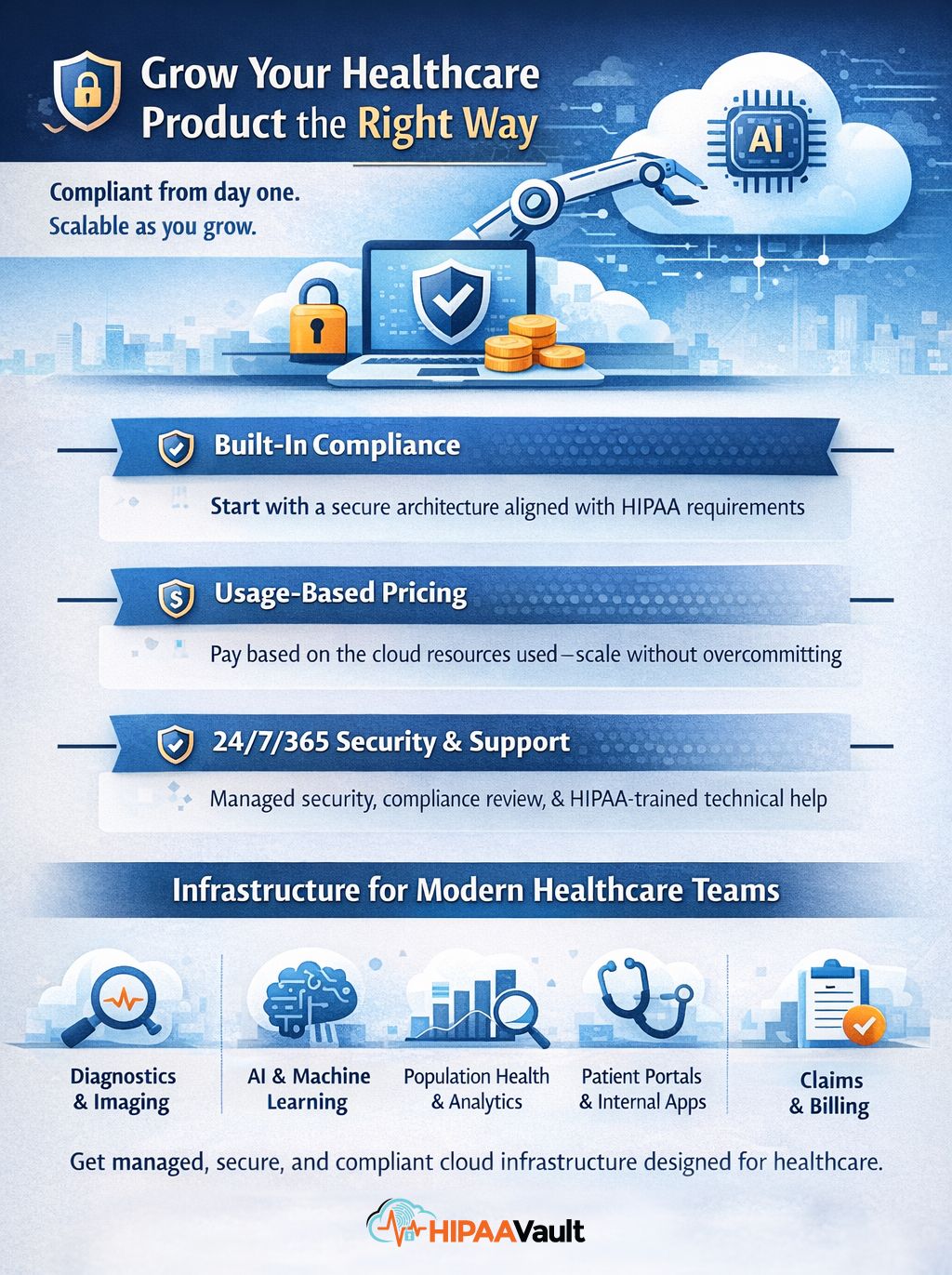
As more healthcare teams expand into AI, analytics, and data-heavy applications, infrastructure decisions matter more than ever. HIPAA Vault’s Usage-Based GCP Plan gives organizations a fully managed, HIPAA-compliant Google Cloud environment with post-paid pricing based on actual GCP usage, teams can scale training and inference without overcommitting on infrastructure. The plan also includes managed security, compliance oversight, 24/7/365 support, and Security Command Center Premium.