- HIPAA Insider
- Posts
- AI healthcare apps are moving fast—and so are the risks
AI healthcare apps are moving fast—and so are the risks
Faster builds, leaner teams, and a growing question: are healthcare apps shipping before they’re truly secure?

HIPAA Insider
April 08, 2026
AI compliance takes more than a checklist by HIPAA Vault
AI is making it easier than ever to build software at warp speed, and in healthcare, that promise is hard to ignore. Faster MVPs, lower development costs, and shorter launch timelines sound like a dream—until protected health information gets involved.
That’s the tension at the center of this week’s story. In a recent podcast interview, Pulse Security AI CEO Mike Armistead explained that AI is changing how software gets built, with top developers spending less time coding and more time guiding architecture, validating outputs, and reviewing systems. But faster development does not automatically mean safer development. In healthcare, an app can work perfectly and still be full of security gaps, compliance issues, and hidden risks.
The big takeaway: AI is not the problem. Shipping too fast without prevention, governance, and healthcare expertise is.
Quote of the Week
“AI is not the problem. Uncontrolled adoption is.”
Want the full conversation behind this week’s feature? Tune in on YouTube and Spotify for a deeper look at AI-built healthcare apps, HIPAA risk, secure development, and why speed without guardrails can quickly become a security problem.
→ Building a healthcare app, testing an MVP, or reviewing your platform before launch? Make sure speed is not outpacing security. Start with a security-first review before you go live.
Industry News Roundup
Cardiovascular Consultants settles breach lawsuit for $3.85 million
A 2023 ransomware attack is still getting expensive. Cardiovascular Consultants in Arizona agreed to pay $3.85 million to settle a class action lawsuit tied to a data breach that exposed the protected health information of roughly 484,000 people.
According to the case, hackers accessed the company’s network in September 2023, exfiltrated sensitive files, and then encrypted systems with ransomware. The compromised data reportedly included everything from names and addresses to Social Security numbers, insurance details, and treatment information. Plaintiffs alleged the organization failed to implement reasonable security protections and unreasonably delayed notifying affected individuals—claims the company denied.
The settlement still needs final approval, but it adds to a growing reality in healthcare: when security controls fail, the bill does not stop at incident response. It can keep running through litigation, settlements, and years of reputational damage.
→ Ransomware was only the beginning. See how the case turned into a $3.85 million settlement.
Six new breaches, same healthcare problem
The legal aftershocks of the Change Healthcare cyberattack are still spreading. Iowa Attorney General Brenna Bird has sued Change Healthcare, UnitedHealth Group, and Optum over the February 2024 ransomware attack that exposed the data of 192.7 million Americans, including 2.2 million Iowans.
The lawsuit argues the companies misrepresented their cybersecurity practices before and after the breach, downplaying what became the largest healthcare data breach in US history. Iowa also alleges Change’s systems were insecure, outdated, and lacked the segmentation and redundancies needed to withstand an attack of that scale. The complaint further takes aim at delayed notifications, saying some affected individuals did not learn their data was compromised until 20 months later.
The bigger message: in healthcare, a cyberattack is no longer just a security story. It is a legal, operational, and reputational crisis that can keep expanding long after systems come back online.
→ The breach shook healthcare. Now the lawsuits are piling up. Read the full story.
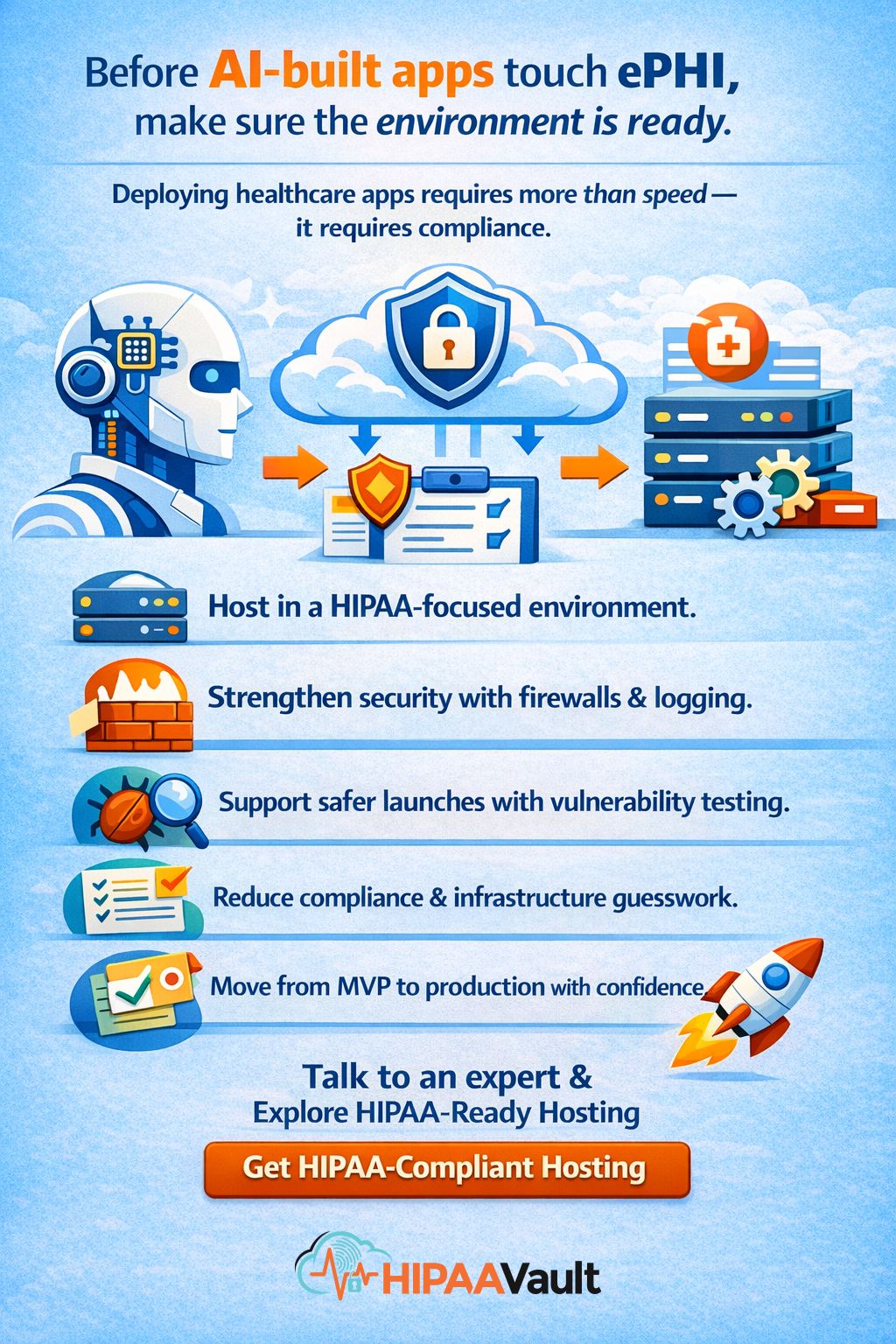
Before AI-built apps touch ePHI, make sure the environment is ready
AI can accelerate healthcare app development, but speed does not make an app secure—or HIPAA-ready. Once patient data enters the picture, hosting, access controls, logging, firewall protection, and ongoing safeguards all become part of the compliance equation. HIPAA Vault helps healthcare teams deploy apps in secure, managed environments designed for HIPAA-sensitive workloads, so innovation can move forward without outrunning security.
What HIPAA Vault helps you do:
Host healthcare apps in a HIPAA-focused environment
Strengthen security with managed firewalls and logging
Support safer launches with vulnerability testing
Reduce infrastructure and compliance guesswork
Move from MVP to production with more confidence